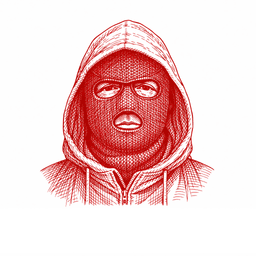


The Golden State Killer: How Forensic Genealogy Ended a 40-Year Manhunt
For more than four decades, a single predator terrorized California under a succession of aliases: the Visalia Ransacker, the East Area Rapist, the Original Night Stalker. He committed at least 13 murders, more than 50 rapes, and over 120 burglaries across the length of the state between 1974 and 1986. Then he vanished. Investigators across multiple agencies spent years chasing false leads. Victims and their families waited decades for answers. It took the invention of an entirely new forensic discipline — investigative genetic genealogy — to finally put a name to the crimes. On April 24, 2018, police arrested Joseph James DeAngelo, a 72-year-old former police officer, at his home in Citrus Heights, California. The case would transform cold case investigation worldwide.
The Crime Spree: Three Identities, One Predator
The Visalia Ransacker (1974-1975)
The earliest crimes attributed to DeAngelo took place in and around Visalia, a small city in California's San Joaquin Valley. From 1974 to 1975, a prolific burglar broke into more than 100 homes in the area, ransacking them in a distinctive pattern — rifling through drawers, stealing personal items including women's undergarments, and occasionally taking small valuables. The crimes were unusual for their frequency and the apparent lack of a clear financial motive. The intruder seemed more interested in violating his victims' personal spaces than in material gain.
The Visalia Ransacker's crimes escalated to murder on September 11, 1975. In the early morning hours, the burglar broke into the home of Claude Snelling, a 45-year-old journalism professor at the College of Sequoias. Snelling's 16-year-old daughter, Beth, woke to find a masked man lying on top of her, whispering that he would stab her to death if she screamed. When Claude Snelling rushed to intervene, the intruder shot him twice from approximately ten feet away, killing him. It was the first known murder committed by the man who would later be identified as the Golden State Killer.
At the time, DeAngelo was employed as a police officer in nearby Exeter, just 15 miles from Visalia. He was committing the burglaries and a murder while wearing a badge.
The East Area Rapist (1976-1979)
In 1976, DeAngelo transferred from the Exeter Police Department to the Auburn Police Department in the Sierra Nevada foothills east of Sacramento. Almost immediately, a terrifying pattern of sexual assaults began in the Sacramento area. From June 1976 to July 1979, the attacker — dubbed the East Area Rapist (EAR) by investigators — committed at least 50 sexual assaults across Sacramento County and surrounding communities, including Rancho Cordova, Carmichael, Citrus Heights, and parts of Contra Costa and San Joaquin counties.
The East Area Rapist displayed an unsettling level of sophistication. He pre-staged his attacks by prowling neighborhoods for days or weeks in advance, identifying entry and exit routes through backyards and open fields. He disabled porch lights, cut phone lines, and unlocked windows and doors before returning to strike, often in the middle of the night. When attacking couples, he employed a signature method: he would stack dishes or cups on the male victim's back after binding him and warn that if he heard the dishes rattle, he would kill everyone in the house. He then assaulted the female victim in another room.
The attacks generated enormous fear across Sacramento. Neighborhood watch groups formed. Gun sales spiked. Hundreds of tips flooded in to overwhelmed investigators. Despite deploying some of the largest law enforcement mobilizations in Sacramento history, police could not catch the attacker. He seemed to know their procedures — because, as it turned out, he was one of them.
On February 2, 1978, the East Area Rapist's crimes escalated to murder. Brian Maggiore, 21, and his wife Katie Maggiore, 20, were shot and killed while walking their dog in Rancho Cordova. Brian was an administrative specialist at Mather Air Force Base. The couple had been married less than two years. Investigators believe they stumbled upon the EAR during an attempted break-in and were killed as they tried to flee.
The Original Night Stalker (1979-1986)
In late 1979, the Sacramento attacks stopped. Simultaneously, a new pattern of murders began in Southern California. The killer, later dubbed the Original Night Stalker (ONS), targeted couples in their homes in Santa Barbara, Ventura, and Orange counties. The violence had escalated dramatically — the attacker was now killing both victims.
The Southern California murders included:
- Robert Offerman and Debra Manning — shot to death in Goleta, Santa Barbara County, on December 30, 1979
- Lyman Smith and Charlene Smith — bludgeoned to death with a fireplace log in their Ventura County home on March 13, 1980. Lyman, 43, was a prominent attorney about to be appointed a Superior Court judge. Charlene, 33, was a home decorator. Their wrists and ankles were bound with drapery cord.
- Keith Harrington and Patrice Harrington — murdered in their Dana Point home in August 1980
- Manuela Witthuhn — killed in her Irvine home on February 5, 1981
- Cheri Domingo and Gregory Sanchez — murdered in Goleta in July 1981
- Janelle Cruz — the final known victim, an 18-year-old raped and beaten to death in her Irvine home in May 1986
After the murder of Janelle Cruz, the crimes stopped entirely. For decades, investigators did not realize the Visalia Ransacker, the East Area Rapist, and the Original Night Stalker were the same person. The geographic scope of the crimes — spanning more than 400 miles of California, from Visalia to Sacramento to Irvine — and the different jurisdictions involved meant that no single agency had the full picture.
The Victims: Decades of Waiting for Justice
The scale of the Golden State Killer's crimes is staggering. Across his 12-year spree, DeAngelo attacked individuals and families in their own homes — the place where they were supposed to feel safest. At his 2020 guilty plea, he admitted not only to the 13 charged murders but also to 161 additional uncharged crimes involving 61 uncharged victims, including attempted murder, kidnapping, rape, robbery, burglary, false imprisonment, and criminal threats.
The impact on survivors and victims' families extended far beyond the crimes themselves. Many survivors suffered decades of post-traumatic stress, nightmares, and fear. Families of murdered victims spent 30 to 40 years not knowing who had taken their loved ones. Communities in Sacramento, Goleta, Ventura, and Irvine lived with the knowledge that a serial predator had operated freely in their neighborhoods and was never caught.
Beth Snelling, who watched DeAngelo kill her father in 1975 when she was 16 years old, waited 43 years to learn the identity of the man who murdered Claude Snelling. The Maggiore family waited 40 years to learn who had gunned down Brian and Katie during a walk with their dog. These families carried the weight of unsolved cases for the majority of their lives.
The Investigation: Decades of Frustration
The Original Investigators
The investigation into the East Area Rapist was one of the largest law enforcement mobilizations in Sacramento County history. Detectives worked the case around the clock during the height of the attacks in 1976-1979, but the perpetrator's counter-forensic awareness and apparent knowledge of police procedures made him exceptionally difficult to catch.
Richard Shelby, a Sacramento County Sheriff's Department detective, was one of the first investigators to recognize that the series of rapes in East Sacramento were connected. Shelby worked the case from its earliest stages and came agonizingly close to identifying DeAngelo. He later documented his experience in the book Hunting a Psychopath: The East Area Rapist/Original Night Stalker Investigation — The Original Investigator Speaks Out. After retiring in 1993, Shelby built a special shed to house the piles of case documents he took home, unable to let go of the unsolved case.
Larry Crompton, a Contra Costa County Sheriff's detective who investigated the EAR cases that extended into his jurisdiction in 1978, authored Sudden Terror (2010), one of the first comprehensive books about the crime series. Crompton's work was critical in compiling police reports from multiple jurisdictions and establishing the full scope of the East Area Rapist's attacks. He wrote the book specifically so that the crimes would not be forgotten and pass into history.
The DNA Breakthrough of 2001
A pivotal moment in the investigation came in 2001, when the Orange County Crime Lab used newly developed STR (Short Tandem Repeat) DNA profiling to analyze biological evidence from the East Area Rapist cases in Sacramento and compare it to crime scene evidence from the Original Night Stalker murders in Southern California. The result was definitive: one person had committed both series of crimes. The East Area Rapist and the Original Night Stalker were the same individual.
This revelation transformed the investigation. Cases that had been handled by separate agencies across multiple counties were now understood as parts of a single, massive crime series encompassing at least 50 rapes and 13 murders. The FBI joined the effort, and the case took on renewed urgency. Yet even with this breakthrough, investigators still had no suspect. The DNA matched no one in any criminal database.
Paul Holes and the Long Pursuit
Paul Holes, a cold case investigator with the Contra Costa County District Attorney's Office, took on the Golden State Killer case and became obsessed with it. Holes spent more than 20 years working the investigation, reviewing old evidence, pursuing leads, and advocating for new forensic techniques. His persistence would ultimately prove decisive.
In 2016, the FBI announced a renewed push to solve the case, offering a $50,000 reward and releasing additional details about the crimes. But the real breakthrough was being developed quietly behind the scenes — a technique that had never been used in a criminal investigation of this magnitude.
Michelle McNamara: The Writer Who Named a Killer
Michelle McNamara was a true crime writer and journalist who became consumed by the East Area Rapist/Original Night Stalker case. In February 2013, she published an article in Los Angeles Magazine titled "In the Footsteps of a Killer," in which she coined the name "Golden State Killer" — a moniker that captured the geographic scope of the crimes spanning from Sacramento to Southern California. The name was subsequently adopted by law enforcement and media outlets, replacing the confusing array of regional nicknames that had fragmented public understanding of the case.
McNamara ran a true crime blog called True Crime Diary and spent years building a massive research database on the case. Her dogged persistence and careful handling of sensitive information earned her an unusual level of cooperation from law enforcement officials, including investigator Paul Holes, who shared case details with her that were not available to the general public.
She signed a book deal with HarperCollins to write a comprehensive account of her investigation. By early 2016, the book was approximately two-thirds complete. On April 21, 2016, Michelle McNamara died in her sleep at the age of 46, from an accidental combination of prescription medications and an undiagnosed heart condition. She never learned the Golden State Killer's identity.
McNamara's unfinished manuscript was completed by crime researcher Paul Haynes, investigative journalist Billy Jensen, and her husband, comedian Patton Oswalt. The book, I'll Be Gone in the Dark: One Woman's Obsessive Search for the Golden State Killer, was published on February 27, 2018 — just two months before DeAngelo's arrest. The title comes from a chilling threat the killer reportedly made to one of his victims. The book became an instant New York Times bestseller and was later adapted into a six-part HBO documentary series in 2020.
In its final pages, McNamara wrote a message directly to the unknown killer: "One day soon, you'll hear a knock at the door. You'll be surprised at how they figured it out." Her prediction proved hauntingly accurate.
While the Sacramento County Sheriff credited McNamara's dedication for raising public awareness, investigators have clarified that her work did not directly generate the tips or forensic evidence that led to DeAngelo's identification. Her legacy lies in something arguably just as important: she kept a cold case warm in the public consciousness at a critical time, ensuring that the Golden State Killer was not forgotten.
The Forensic Genealogy Breakthrough
How Investigative Genetic Genealogy Works
Investigative genetic genealogy (IGG) is a technique that combines DNA analysis with traditional genealogical research to identify unknown individuals. Unlike conventional forensic DNA analysis, which compares a crime scene sample against a database of known offenders, IGG works by uploading a DNA profile to a public genealogy database where ordinary people have voluntarily shared their genetic information to find relatives. When the crime scene DNA partially matches profiles in the database — indicating distant relatives — investigators can then build family trees using traditional genealogy methods, narrowing down the possible identity of the unknown individual.
The key platform in the Golden State Killer case was GEDmatch, a free, publicly accessible genetic genealogy database where users voluntarily upload their DNA profiles (typically obtained through consumer services like AncestryDNA or 23andMe) to find genetic relatives. Unlike the commercial DNA testing services, GEDmatch was open and did not restrict law enforcement access at the time.
Barbara Rae-Venter: The Genealogist Who Cracked the Case
The central figure in the forensic genealogy effort was Barbara Rae-Venter, a 74-year-old retired patent attorney with a Ph.D. in biology who had become an expert genealogist. In March 2017, Paul Holes contacted Rae-Venter to explore whether genealogy databases could be used to generate new leads in the case.
In December 2017, Holes and FBI lawyer Steve Kramer uploaded the Golden State Killer's DNA profile — extracted from a Ventura County rape kit — to GEDmatch. The database identified 10 to 20 individuals who shared enough DNA with the unknown suspect to be distant relatives, sharing common great-great-great-grandparents.
From these partial matches, Rae-Venter began the painstaking work of building family trees. Using traditional genealogical records — census data, birth and death certificates, marriage records, newspaper archives — she constructed sprawling family trees that eventually converged on a small group of potential suspects. GEDmatch's eye color prediction tool provided an additional data point, indicating the suspect had blue eyes. The family tree analysis ultimately narrowed the field to six men. One of them was Joseph James DeAngelo.
Rae-Venter's work on the case was recognized in Nature magazine's 2018 list of "people who mattered" in science and on the Time 100 list of most influential people in 2019. She later documented her experience in the book I Know Who You Are: How an Amateur DNA Sleuth Unmasked the Golden State Killer and Changed Crime Fighting Forever.
The Arrest: April 24, 2018
With DeAngelo identified as the primary suspect through forensic genealogy, investigators needed to obtain a confirmatory DNA sample without alerting him. On April 18, 2018, a DNA sample was surreptitiously collected from the door handle of DeAngelo's car. A second sample was obtained from a tissue found in his curbside garbage can. Both samples were matched to DNA from Golden State Killer crime scenes.
On April 24, 2018, Sacramento County Sheriff's deputies arrested Joseph James DeAngelo at his home in Citrus Heights, California — in a grim irony, the same Sacramento County suburb where the East Area Rapist had committed his first known sexual assault in June 1976. DeAngelo, dressed in a T-shirt, cargo shorts, and tube socks, was standing in his yard when officers moved in. He offered no resistance.
Sacramento District Attorney Anne Marie Schubert announced the arrest at a press conference on April 25, 2018. DeAngelo was initially charged with eight counts of first-degree murder based on DNA evidence. Additional charges followed as cases from multiple counties were consolidated.
Left alone in a police interrogation room after his arrest, DeAngelo was overheard speaking to himself: "I did all that," he said. He went on: "I didn't have the strength to push him out. He made me. He went with me. It was like in my head, I mean, he's a part of me. I didn't want to do those things."
The shock of DeAngelo's identity reverberated through the law enforcement community and the public. He had been living quietly as a retired mechanic in a modest Citrus Heights neighborhood. His neighbors described him as a recluse. No one who knew him suspected that the elderly man next door was one of the most prolific serial offenders in American history.
Joseph James DeAngelo: The Man Behind the Crimes
Joseph James DeAngelo Jr. was born on November 8, 1945, in Bath, New York. He joined the United States Navy in September 1964 and served for 22 months during the Vietnam War as a damage controlman aboard the cruiser USS Canberra and the destroyer tender USS Piedmont.
After his military service, DeAngelo enrolled at Sierra College in Rocklin, California, in 1968, graduating with an associate degree in police science with honors. He then attended Sacramento State University, earning a bachelor's degree in criminal justice in 1971.
DeAngelo began his law enforcement career as a police officer with the Exeter Police Department in Tulare County in May 1973. He served there until August 1976, during which time the Visalia Ransacker burglaries and the murder of Claude Snelling occurred just 15 miles away. He then transferred to the Auburn Police Department in Placer County.
In July 1979, DeAngelo was arrested for shoplifting a can of dog repellent and a hammer from a drugstore in Sacramento. He was sentenced to six months of probation and fired from the Auburn Police Department that October. His law enforcement career was over — but his criminal career continued for seven more years in Southern California.
DeAngelo's background in law enforcement is widely believed to have helped him evade capture for decades. His training in police procedures gave him an understanding of how investigations worked, how crime scenes were processed, and how to avoid leaving evidence. He knew the patterns of police patrols and could anticipate investigative strategies. This insider knowledge, combined with his meticulous pre-attack surveillance of victims and neighborhoods, made him exceptionally difficult to catch through conventional police work.
After his firing from Auburn PD, DeAngelo worked as a mechanic at a Save Mart distribution center in Roseville, California, until his retirement. He married and had three daughters. To his family and neighbors, he presented an unremarkable facade that belied the horrific crimes of his past.
The Trial and Guilty Plea
On June 29, 2020, Joseph DeAngelo entered a guilty plea to 13 counts of first-degree murder and 13 counts of kidnapping in a deal that spared him the death penalty. In exchange, he admitted to the full scope of his crimes, including the sexual assaults for which the statute of limitations had expired. He also admitted to 161 additional uncharged crimes involving 61 victims.
The case was the largest criminal case ever consolidated in California history, bringing together charges from six counties: Sacramento, Contra Costa, Santa Barbara, Ventura, Orange, and Tulare.
Over three days in August 2020, survivors and victims' family members gave impact statements at a hearing held at Sacramento State University — the venue chosen to accommodate social distancing during the COVID-19 pandemic. The statements were raw, emotional, and long overdue. Some victims had waited more than 40 years to confront the man who attacked them.
One survivor called DeAngelo "subhuman." Karen Veilleux, speaking on behalf of her sister Phyllis, said, "May he rot in hell." Beth Snelling, who had been 16 when she watched DeAngelo kill her father, finally faced the man who had murdered Claude Snelling 45 years earlier.
DeAngelo, who had appeared frail and used a wheelchair throughout the proceedings, stood at the sentencing hearing and addressed the court: "I'm truly sorry to everyone I've hurt," he said. Many victims and their families found the apology hollow and insufficient.
On August 21, 2020, DeAngelo was sentenced to 11 consecutive life sentences without the possibility of parole, plus additional terms. Sacramento District Attorney Anne Marie Schubert noted in her remarks: "It's been 16,417 days since Joseph DeAngelo started his reign of terror."
Legacy and Impact on Cold Case Investigation
The Forensic Genealogy Revolution
The Golden State Killer case did not merely solve one of America's most infamous cold cases — it launched an entirely new era in forensic investigation. The successful use of investigative genetic genealogy to identify DeAngelo demonstrated that even decades-old cases with no suspect and no match in criminal DNA databases could be solved.
In the years following DeAngelo's arrest, forensic genealogy was used to solve hundreds of cold cases across the United States. By 2023, the technique had been applied to over 500 investigations. Notable cases solved through IGG include:
- April Tinsley (1988) — An 8-year-old girl abducted and murdered in Fort Wayne, Indiana. In 2018, forensic genealogy identified John Miller as the suspect, 30 years after the crime. Miller pleaded guilty and was sentenced to 80 years in prison.
- Daytona Beach serial killings (2005-2006) — Robert Tyrone Hayes was identified through forensic genealogy and linked to the murders of four women in the Daytona Beach area.
- Numerous unidentified remains cases, including the work of the DNA Doe Project, which has used forensic genealogy to identify previously unknown homicide victims and missing persons.
Companies like Parabon NanoLabs, based in Reston, Virginia, have expanded forensic genealogy services into a growing industry, offering DNA phenotyping and genetic genealogy analysis to law enforcement agencies nationwide.
Anne Marie Schubert and the Prosecution Model
Sacramento District Attorney Anne Marie Schubert played a crucial role not only in prosecuting DeAngelo but in establishing a model for how forensic genealogy cases could be brought through the legal system. The multi-county consolidation of charges in the Golden State Killer case set precedents for how law enforcement agencies could coordinate across jurisdictions when forensic genealogy identifies suspects in cases spanning multiple regions.
The Privacy Debate
The Golden State Killer case also ignited a significant debate about genetic privacy and the ethics of law enforcement access to consumer DNA databases. When investigators uploaded the killer's DNA to GEDmatch, the site's terms of service did not explicitly address law enforcement use. The individuals whose DNA partially matched the crime scene sample had uploaded their genetic information to find relatives — not to assist in criminal investigations. Their genetic data was used without their knowledge or consent to identify a distant family member.
The case raised difficult questions:
- Should law enforcement have access to genetic databases created for personal genealogy research?
- Can individuals be implicated by the DNA of relatives who chose to share their genetic information publicly?
- What safeguards should exist to prevent misuse of genetic information by government agencies?
- Do the benefits of solving violent crimes outweigh the privacy concerns?
In response to the controversy, GEDmatch changed its policies. The site updated its terms of service to require users to explicitly opt in to allow their profiles to be used in law enforcement searches. Initially, GEDmatch limited law enforcement access to cases involving violent crimes, though the definition of "violent crime" was later expanded. In 2019, GEDmatch was acquired by Verogen, a forensic genetics company, further intertwining consumer genealogy with law enforcement applications.
The Department of Justice issued an interim policy in 2019 governing law enforcement use of consumer genealogy databases. The policy requires that agencies only search databases that provide "explicit notice to their service users and the public that law enforcement may use their service sites." The policy also restricts the technique to cases involving violent crimes or unidentified human remains.
A 2018 study published in Science estimated that the technique used to identify DeAngelo could potentially be applied to approximately 60 percent of Americans of European descent — meaning a majority of this population could be identified through a relative's DNA in public genealogy databases, even if they had never submitted a sample themselves. As more people upload their DNA to genealogy services, that percentage continues to grow.
Broader Implications: How One Case Changed Law Enforcement
The Golden State Killer case stands as a watershed moment in the history of criminal investigation. Its impact extends across multiple dimensions.
Forensic science. The case validated investigative genetic genealogy as a legitimate and powerful law enforcement tool. What was once an experimental technique pursued by a retired patent attorney and a determined cold case investigator is now a standard capability offered by forensic laboratories and private companies. Police departments and district attorneys across the country have established forensic genealogy programs.
Cold case resolution. The case demonstrated that no cold case is truly unsolvable if biological evidence has been preserved. Departments that had shelved decades-old cases began reopening them, submitting preserved DNA evidence for forensic genealogy analysis. The result has been a dramatic increase in the clearance rate for cold cases involving serial offenders and unidentified victims.
Legal precedent. Courts have largely upheld the use of forensic genealogy evidence. A Washington appellate court ruled that a suspect does not have a privacy interest in a relative's decision to upload DNA to a public database. This ruling and others have established a legal framework that allows the technique to continue expanding.
Public engagement. The case renewed interest in the intersection of technology, privacy, and justice. Michelle McNamara's book and the HBO documentary brought the story to millions of people who had never heard of the East Area Rapist. The case demonstrated the power of obsessive, dedicated investigators — both professional and amateur — in keeping cold cases alive.
Accountability. Perhaps most importantly, the case delivered a measure of justice that many believed would never come. After 16,417 days, the survivors of the Golden State Killer's attacks and the families of his murder victims finally had a name, a face, and a conviction. Joseph James DeAngelo will spend the rest of his life in prison. The communities he terrorized across California can know that the man who stalked their neighborhoods, broke into their homes, and shattered their sense of safety has been identified, prosecuted, and held accountable.
The Golden State Killer case is a reminder that advancements in science can bring justice even when conventional investigation has reached its limits — and that the determination of investigators, writers, and advocates can keep a case alive long enough for those advancements to arrive.